

首页 - Pakistan Studies
Pakistan Studies/Published by the Pakistan Research Center, Inner Mongolia Honder College of Arts and Sciences
On 21 May 2021, the Pakistan Research Center of Inner Mongolia Honder College of Arts and Sciences organized a field visit to the Xingtai Linjiahao Photovoltaic Power Station in Tuoketuo County, Hohhot, Inner Mongolia, to strengthen research on renewable energy development and explore the role of clean energy in advancing sustainable cooperation under the Belt and Road Initiative (BRI).
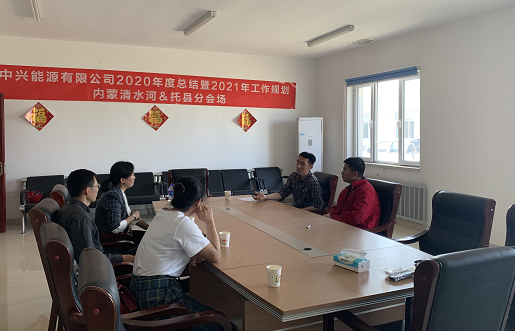
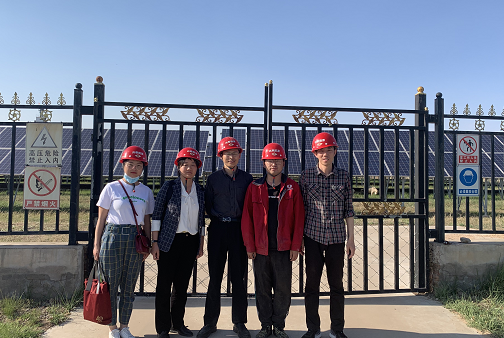
The delegation included Dr. Han Mengyao, Associate Research Fellow at the Institute of Geographic Sciences and Natural Resources Research, Chinese Academy of Sciences, Mr. Tang Jun, Director of the Pakistan Research Center, and Ms. Huang Tingting, Research Fellow of the Center.
The visit formed part of the Center's continuing efforts to examine practical experiences in renewable energy development and to support academic research on low-carbon development, sustainable infrastructure, and China–Pakistan energy cooperation.
During the visit, the delegation was welcomed by Mr. Li Bo, Project Manager of Zhongxing Energy, together with technical staff from the photovoltaic station.
The research team toured the project's operational facilities, including:
Engineers introduced the overall design and operational management of the solar power station, explaining how advanced photovoltaic technology converts solar energy into electricity while ensuring efficient, stable, and environmentally friendly power generation.
The delegation also learned about intelligent monitoring systems, equipment maintenance procedures, grid connection technologies, and operational safety management.
During the field study, researchers and project engineers held in-depth discussions on several important topics related to renewable energy development, including:
Participants exchanged views on how renewable energy can contribute to achieving carbon reduction goals while supporting sustainable economic development.
The discussions also explored the growing importance of green infrastructure in promoting regional cooperation under the Belt and Road Initiative.
As countries participating in the Belt and Road Initiative continue to pursue sustainable development, renewable energy has become an increasingly important area of international cooperation.
The Pakistan Research Center noted that photovoltaic technology offers significant opportunities for countries seeking to diversify their energy supply, improve energy security, and reduce greenhouse gas emissions.
For Pakistan in particular, solar energy possesses enormous development potential due to its abundant sunshine and growing demand for electricity.
China's experience in photovoltaic technology, project management, equipment manufacturing, and large-scale renewable energy deployment provides valuable reference for countries seeking to accelerate their energy transition.
The delegation observed that strengthened academic exchange and technical cooperation between China and Pakistan could contribute to:
According to project representatives, the Xingtai Photovoltaic Project in Hohhot achieved full grid connection on 29 June 2016, with an installed capacity of 20 megawatts (MW).
The project is located in Wushijia Township, Tuoketuo County, Hohhot, Inner Mongolia, serving nearby communities while contributing clean electricity to the regional power grid.
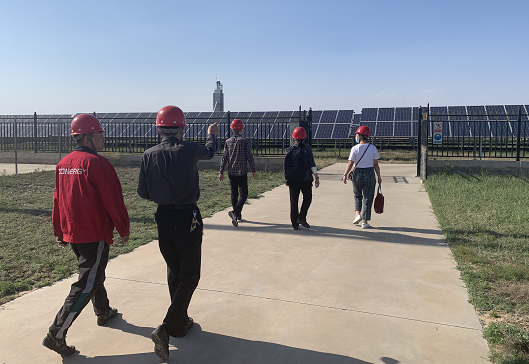
The solar power station demonstrates the practical application of renewable energy technologies and reflects China's broader efforts to promote green development, energy efficiency, and ecological sustainability.
The Pakistan Research Center continues to pay close attention to energy cooperation between China and Pakistan, particularly in areas related to renewable energy, sustainable infrastructure, climate governance, and environmental protection.
As Pakistan continues to expand its renewable energy capacity and pursue a more diversified energy mix, experiences from China's photovoltaic industry offer valuable insights for future collaboration in solar energy development, technical training, research cooperation, and capacity building.
The field visit further strengthened the Center's understanding of photovoltaic technologies and provided practical knowledge that will support future academic research on low-carbon development and clean energy cooperation under the Belt and Road Initiative.


