Book Co-Edited by Pakistan Research Center, Case Studies of the Belt and Road Initiative: An Inclusive Globalization Perspective, Officially Released
Published on: April 5, 2023
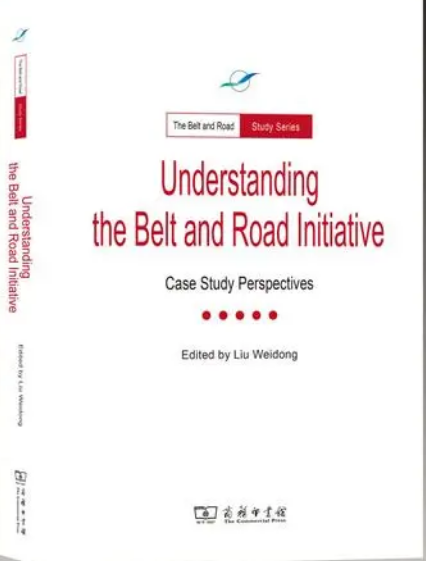
On June 16, 2021, the book Case Studies of the Belt and Road Initiative: An Inclusive Globalization Perspective (Chinese and English editions), co-edited with the participation of the Pakistan Research Center of Inner Mongolia Honder College of Arts and Sciences, was officially launched in Beijing by the The Commercial Press.
The publication of this book represents an important academic achievement in the field of Belt and Road Initiative (BRI) studies. It provides a comprehensive and systematic analysis of real-world cooperation projects under the BRI framework from the perspective of inclusive globalization, offering valuable academic references and practical insights for understanding the development process, cooperation models, and global impacts of the initiative.
Book Launch Ceremony and Academic Symposium Held in Beijing
The book launch ceremony and academic symposium were held at the auditorium of The Commercial Press on June 16, 2021. The event brought together numerous distinguished experts, scholars, government representatives, and researchers from leading academic institutions, think tanks, and organizations.
Participants included:
- Academician Lu Dadao, Chinese Academy of Sciences, former President of the Geographical Society of China, and Vice President of the International Geographical Union;
- Wang Linggui, Vice President of the Chinese Academy of Social Sciences;
- Zhai Dongsheng, Director of the Belt and Road Construction Promotion Center of the National Development and Reform Commission;
- Liu Yong, former Chief Economist of the China Development Bank;
- Li Xiangyang, Director of the Institute of Asia-Pacific and Global Strategy, Chinese Academy of Social Sciences;
- Wang Wen, Executive Dean of the Chongyang Institute for Financial Studies, Renmin University of China;
- Xu Zhiqiang, Deputy Director of the Silk Road Planning Center Office of the National Committee of the Chinese People's Political Consultative Conference;
- Hu Changshun, Deputy Director of the Institute of Modern Economic Research of the National Development and Reform Commission;
- An Baosheng, Deputy Director of the Institute of Tibetan Plateau Research, Chinese Academy of Sciences, and Director of the CAS Silk Road Environmental Research Program;
- Qin Yucai, Director of the Belt and Road Research Institute of the National Development and Reform Commission;
- Zheng Jun, President of the China-Turkey Research Institute;
- Zhang Lei, Deputy President of the China-Turkey Research Institute;
- Lu Yang, Tsinghua University Belt and Road Strategy Institute;
- Sun Meiyan, CEO of the Belt and Road Portal;
- Zhang Hechan, Manager of the Big Data Department of the Belt and Road Portal;
- Cui Yiting, Director of the Silk Road Dialogue Committee;
- Liu Weidong, Researcher and Deputy Director of the Institute of Geographic Sciences and Natural Resources Research, Chinese Academy of Sciences;
- Li Yan, Member of the Party Group of China Publishing Group Corporation, Director and General Manager of China Publishing & Media Co., Ltd.;
- Gu Qing, Party Secretary and Executive Director of The Commercial Press;
- Li Ping, General Manager and Deputy Party Secretary of The Commercial Press;
- Li Juan, Deputy Director of the Education, Science and Culture Center and Director of the Science and Technology Editorial Department of The Commercial Press.
The event was also attended by the book’s authors, editors, and representatives from relevant academic institutions and research organizations.
Academic Significance of the Book
The launch ceremony was chaired by Li Ping, General Manager of The Commercial Press. During the opening session, Gu Qing, Lu Dadao, and Li Yan delivered speeches, congratulating the publication of the book and highlighting its academic significance and practical value.
Researcher Liu Weidong introduced the main contents and research framework of Case Studies of the Belt and Road Initiative: An Inclusive Globalization Perspective. Following the introduction, participating experts conducted extensive discussions and highly praised the book’s contribution to understanding and promoting high-quality development of the Belt and Road Initiative.
As the first systematic and in-depth academic work focusing on case studies of BRI construction projects, the book was jointly completed by dozens of Chinese and international scholars. It provides a comprehensive examination of 21 representative BRI projects and summarizes important theoretical findings based on practical experiences.
The book first analyzes the major project types and cooperation models under the Belt and Road Initiative. It then examines specific cases from multiple dimensions, including:
- Governance structures of host countries;
- Historical development processes;
- International cooperation models;
- Socio-economic impacts;
- Environmental impacts;
- Institutional and cultural factors influencing project implementation.
The 21 case studies cover projects across 19 countries along the Belt and Road routes, involving diverse fields such as:
- Railway construction;
- Port development;
- Overseas economic and trade cooperation zones;
- Manufacturing industries;
- Mining and mineral processing;
- Clean energy projects;
- Logistics cooperation.
The cases include projects initiated both before and after the launch of the Belt and Road Initiative, providing a broad historical and comparative perspective on the evolution of international cooperation.
A Comprehensive Study of Belt and Road Development Practices
With rich illustrations, data, and detailed case analysis, the book presents a comprehensive overview of the actual development of Belt and Road projects from the project level. It serves as an important reference for researchers, policymakers, students, and entrepreneurs interested in understanding international cooperation and overseas investment practices.
The book features five major academic contributions:
1. The First Comprehensive and Systematic Study of BRI Cases
The book represents the first major academic work dedicated to systematically studying Belt and Road construction cases.
Through detailed analysis of 21 projects, the book examines host-country governance structures, project development processes, cooperation mechanisms, and social, economic, and environmental impacts.
By focusing on specific projects, the research provides concrete answers to fundamental questions regarding what the Belt and Road Initiative is and how it operates in practice.
2. Scientific Assessment of BRI Development Progress
The book provides an academic evaluation of the progress achieved under the Belt and Road framework.
According to the research findings, the China Connectivity Index reached 43.04 in 2019, increasing by 86.5% compared with 2013 and 10.6% compared with 2017.
The assessment indicates that BRI development has gradually shifted from an initial stage of rapid expansion toward a stage emphasizing balanced, sustainable, and high-quality development.
The narrowing gap among different connectivity sectors also demonstrates that development is moving from uneven growth toward greater coordination and integration.
3. Contribution to Emerging Belt and Road Research
The book systematically reviews the development of academic research related to the Belt and Road Initiative.
It emphasizes that BRI studies have become an emerging interdisciplinary research field involving international relations, economics, geography, development studies, cultural communication, and global governance.
The authors argue that deeper mutual understanding between Chinese and international scholars is essential for generating meaningful academic knowledge and supporting sustainable BRI development.
By focusing on practical construction cases, researchers can better observe real-world experiences and establish common academic perspectives.
4. Classification of BRI Cooperation Models
The book scientifically categorizes Belt and Road projects and summarizes major cooperation models from institutional and cultural perspectives.
It identifies three primary development models:
- Engineering, Procurement, and Construction (EPC)-based cooperation;
- Concession-based cooperation;
- Direct investment by enterprises.
The study highlights the importance of government-supported cooperation frameworks and analyzes how different institutional environments and cultural contexts influence project implementation.
5. Providing Theoretical Guidance for International Cooperation
Based on extensive case studies, the book summarizes theoretical knowledge and practical experiences relevant to overseas development.
The findings provide valuable guidance for Chinese enterprises participating in international markets, especially those seeking to expand overseas operations and contribute to global economic cooperation.
Contribution of the Pakistan Research Center
The participation of the Pakistan Research Center of Inner Mongolia Honder College of Arts and Sciences in the editing and research process of this important publication reflects the Center’s commitment to advancing China-Pakistan studies, Belt and Road research, and international academic cooperation.
Through participation in major academic projects, the Center continues to promote interdisciplinary research, strengthen connections between Chinese and international scholars, and contribute academic perspectives to understanding global development initiatives.
The publication of Case Studies of the Belt and Road Initiative: An Inclusive Globalization Perspective represents an important achievement in BRI-related research and provides valuable knowledge resources for promoting inclusive globalization, international cooperation, and sustainable development.
Going forward, the Pakistan Research Center will continue to engage in high-quality academic research, international collaboration, and knowledge exchange, contributing to deeper understanding and cooperation between China, Pakistan, and countries along the Belt and Road.




