

首页 - News & Events
News & Events/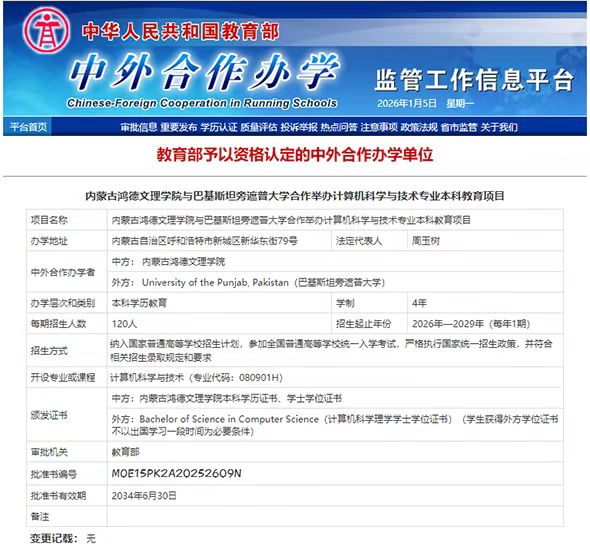
(Screenshot from the Ministry of Education website)
On December 31, 2025, the Ministry of Education of China officially approved the undergraduate program in Computer Science and Technology, jointly offered by Inner Mongolia Honder College of Arts and Sciences and the University of the Punjab, Pakistan. This milestone achievement marks three key breakthroughs: the first-ever undergraduate-level Sino-foreign cooperative education program between China and Pakistan, the first Sino-foreign cooperative education program approved in Inner Mongolia Autonomous Region since the pandemic, and the first such proagram in the history of Inner Mongolia Honder College of Arts and Sciences.
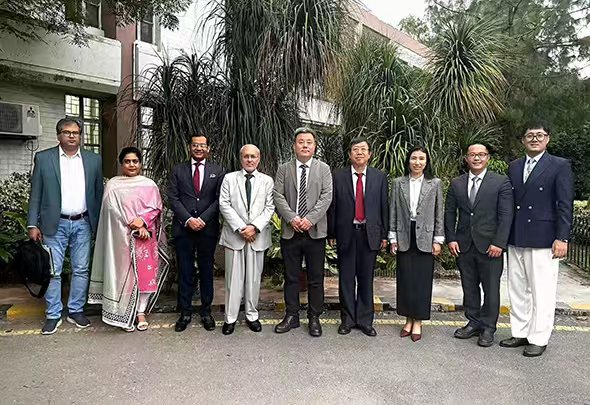
(Honder delegation signs agreement with the University of the Punjab, Pakistan)
The four-year program will be included in the national higher education enrollment plan and will officially begin student recruitment in September 2026. The program adopts a dual-degree training model. Students who complete their studies and meet the graduation and degree requirements of both institutions will simultaneously receive a bachelor’s degree certificate and graduation certificate from Inner Mongolia Honder College of Arts and Sciences, as well as a bachelor’s degree certificate from the University of the Punjab, Pakistan. The dual-degree accreditation will broaden students’ pathways for further study, cross-border employment, and career development, helping them grow into high-quality, versatile talent in the field of computer science and technology.
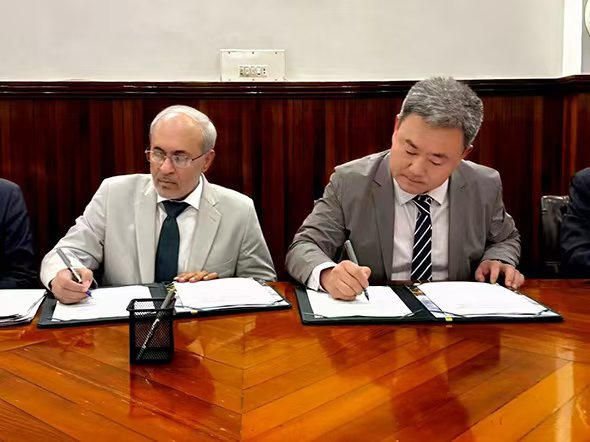
(Signing ceremony of the cooperative program between the two institutions)
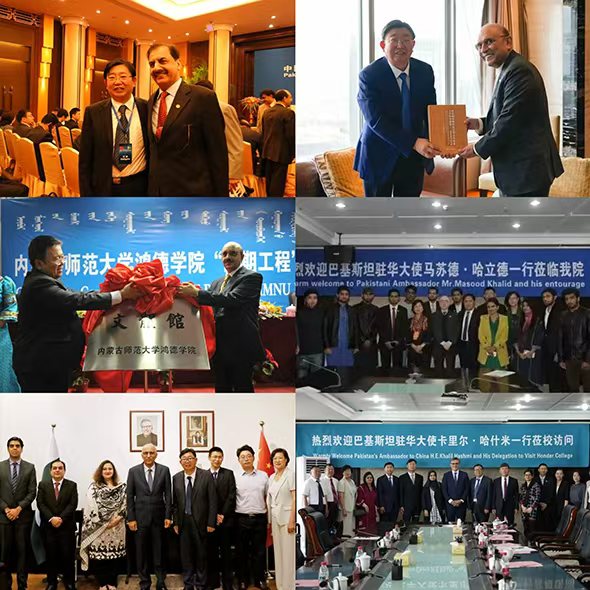
Looking back at the gestation of this project, this breakthrough is no accident. Rather, it is the natural outcome of more than a decade of deep commitment by Inner Mongolia Honder College of Arts and Sciences to international education, particularly in the realm of China-Pakistan educational exchange. Since first establishing contact with the Embassy of Pakistan in China in 2010, the College has forged deep ties with Pakistan: in 2025, President Asif Ali Zardari met with President Zhou Yushu; before that, three Pakistani ambassadors to China visited the College five times, and the Pakistani Ministry of Foreign Affairs officially invited the College to visit Pakistan on two occasions. The establishment of the “Masood Hall” and the “Pakistan Research Center” has also provided a lasting window for cultural exchange between China and Pakistan. Over the past ten-plus years, the College has dispatched over 50 Chinese language teachers to Pakistan, organized six groups totaling more than 50 students for exchange programs, and hosted over 80 Pakistani students under government scholarships. In 2023, the International Academic Symposium on China-Pakistan History and Culture, co-hosted with the University of the Punjab, laid a solid foundation for this cooperative program.
Within its international education landscape, the College has long demonstrated the vision and capability to “go global.” As the first independent private undergraduate institution in Inner Mongolia, the College has established stable partnerships with more than 10 universities across 7 countries, including Pakistan, South Korea, Mongolia, and Russia. It has also successfully obtained the right to operate Darkhan College in Mongolia, serving as a notable example of Chinese higher education institutions running overseas campuses. This cooperation with the University of the Punjab both deepens its existing international education experience. It fills a gap in undergraduate-level cooperative education between China and Pakistan, offering a new model for educational cooperation along the Belt and Road.
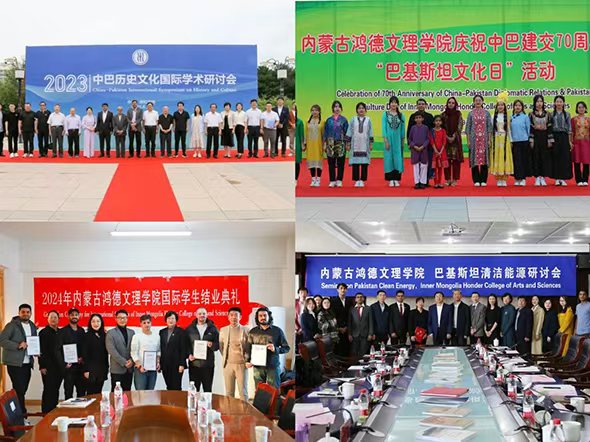
Beyond its educational value, this program also serves multiple missions: advancing national strategy, empowering regional development, and driving reform across both institutions. At present, the China-Pakistan Economic Corridor (CPEC) is entering a new phase of “digital empowerment.” The advancement of projects such as smart ports and digital infrastructure requires a large number of versatile computer professionals who “understand technology, are proficient in both languages, and know the national conditions of both countries.” The program will focus on developing students’ cross-cultural communication skills and their ability to work on international projects. Future graduates will be well-positioned to serve Chinese enterprises in Pakistan and to participate deeply in China-Pakistan digital cooperation projects, helping to alleviate the talent shortage in the ICT (Information and Communication Technology) sectors of both countries.
From a regional perspective, the approval of this program breaks the “silence” on Sino-foreign cooperative education in Inner Mongolia following the pandemic. According to publicly available information, most previous Sino-foreign cooperative education programs in the region were approved before the pandemic. The launch of this computer science program not only injects new vitality into the internationalization of higher education in the region but also precisely aligns with the strategic needs of the “Revitalizing Inner Mongolia Through Science and Technology” initiative and the construction of a gateway for northward opening-up, opening a new path for border regions to access high-quality international educational resources.
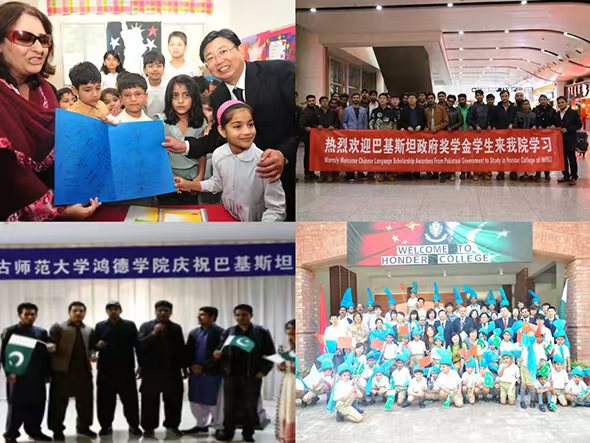
For the College, the program could not have come at a better time. As the “Revitalizing Inner Mongolia Through Science and Technology” initiative deepens, the region is accelerating the construction of a digital gateway facing Russia and Mongolia. As the first Sino-foreign cooperative education program approved in the region since the pandemic, this computer science program precisely addresses the talent needs of the region’s digital industry upgrading. Leveraging the international cooperation bridge established by the program, it can facilitate technical exchanges and business cooperation between digital enterprises in Inner Mongolia and relevant Pakistani institutions, and expand the digital services market along the Belt and Road through China-Pakistan cooperation channels. Meanwhile, the versatile graduates cultivated by the program will bring professional expertise to the region’s northward opening-up, helping to solve talent shortages in areas such as cross-border digital trade and international data cooperation. In this way, the achievements of educational cooperation will be translated into tangible momentum for high-quality regional development, providing solid talent support for the effective implementation of the “Revitalizing Inner Mongolia Through Science and Technology” strategy.
The successful approval of this program is not only a milestone in the internationalization of Inner Mongolia Honder College of Arts and Sciences but also opens up a new track and establishes a high-level platform for deepening the College’s international exchanges and cooperation. Looking ahead, the College will take this program as a key engine to continue firmly implementing its open-door development strategy. Grounded in the Belt and Road Initiative, it will further deepen all-around cooperation with universities in Pakistan and other countries along the route. This collaborative achievement will inject strong momentum into the College’s efforts to deepen its internal development and achieve high-quality growth during the 15th Five-Year Plan period. At the same time, it will continue to solidify the foundation of China-Pakistan educational cooperation, using education as a bond to enhance emotional resonance between the two peoples and to contribute solid human resources to serving the nation’s opening-up and building an even closer China-Pakistan community with a shared future.
翻译:王妮
编辑:梁佳欣


