首页 - Pakistan Studies
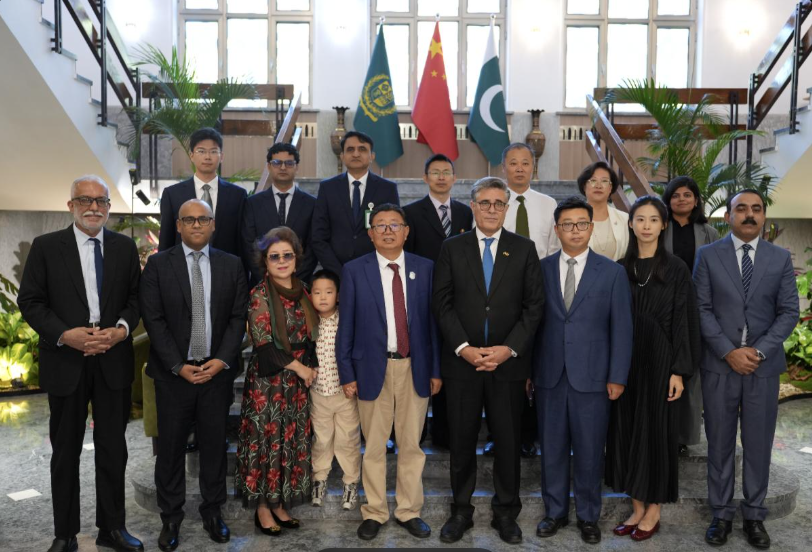
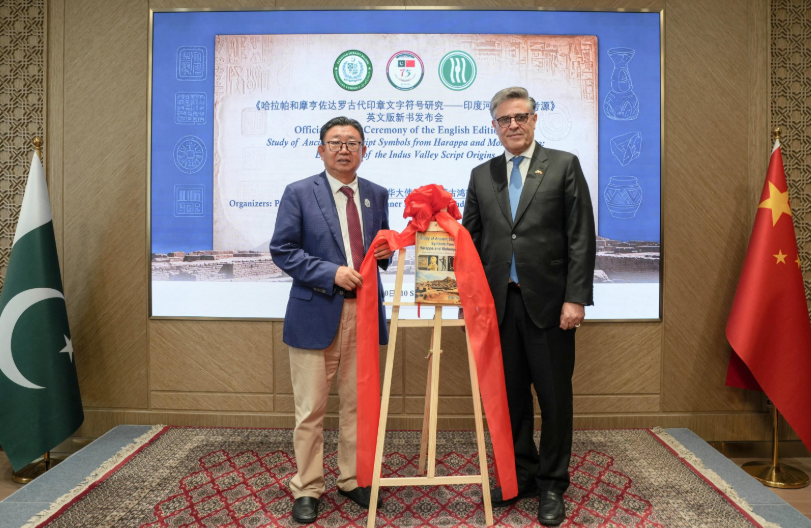
Pakistan Studies/Community Culture Network (Reported by Wang Qingjiang) — On September 10, 2026, the launch ceremony for the English edition of A Study of the Ancient Seal Script Symbols of Harappa and Mohenjo-daro — Tracing the Origin of the Indus Valley Script was grandly held at the Embassy of Pakistan in China. The event was jointly hosted by the Embassy of Pakistan in China and Inner Mongolia Honder College of Arts and Sciences. Scholars, cultural figures, and media representatives from China and Pakistan gathered together to witness the global release of this archaeological academic work, explore the ancient origins of the ancient Indus Valley civilization and Chinese civilization, and write a new chapter in mutual learning between Chinese and Pakistani civilizations.
At the launch ceremony, His Excellency Khalil Hashmi, Pakistan's Ambassador to China, delivered a speech. He extended warm congratulations to Professor Zhou Yushu and his research team on their breakthrough academic achievements. The Ambassador noted that this work is not only an important academic achievement, but also a model of China and Pakistan jointly building a bridge of knowledge and cultural exchange. The Pakistani government has decided to award Professor Zhou Yushu Pakistan's highest-level civil honor, the "Sitara-i-Quaid-i-Azam" (Star of Quaid-i-Azam) Medal, in recognition of his outstanding contributions to deepening Pakistan-China people-to-people and cultural exchanges. The book has now been released in English and translated into Urdu, which will allow more Pakistani readers to access this important academic research. He stated that the symbol system revealed in the book opens a new perspective for the academic community to re-examine the civilizational connections between ancient China and the region that is now Pakistan, proving that civilizational exchanges between China and Pakistan date back far earlier than previously recognized. The Gandhara civilization and the westward journeys of Faxian and Xuanzang in search of Buddhist scriptures are classic marks of China-Pakistan civilizational exchanges, and this seal script research has further unearthed clues to cultural interaction between the two regions in prehistoric times.
Professor Zhou Yushu, President and Chairman of Inner Mongolia Honder College of Arts and Sciences, delivered a keynote speech, comprehensively introducing the college's development, the research achievements of the Pakistan Research Center, and the research process of the Indus Valley seal script. According to the introduction, Inner Mongolia Honder College of Arts and Sciences was founded in 2008 and currently has 19,000 students. In addition to its main campus, it has also founded Beijing Institute of Economics and Technology and established Darkhan College in Mongolia. The college established the Rock Art Research Institute in 2014 and the Pakistan Research Center in the same year. It now has 23 full-time research personnel, has cumulatively published 7 monographs and translated works, published more than 50 academic papers, and hosted or participated in more than 20 international academic conferences, conducting in-depth research in areas such as China-Pakistan educational cooperation, mutual learning between civilizations, and regional economies.
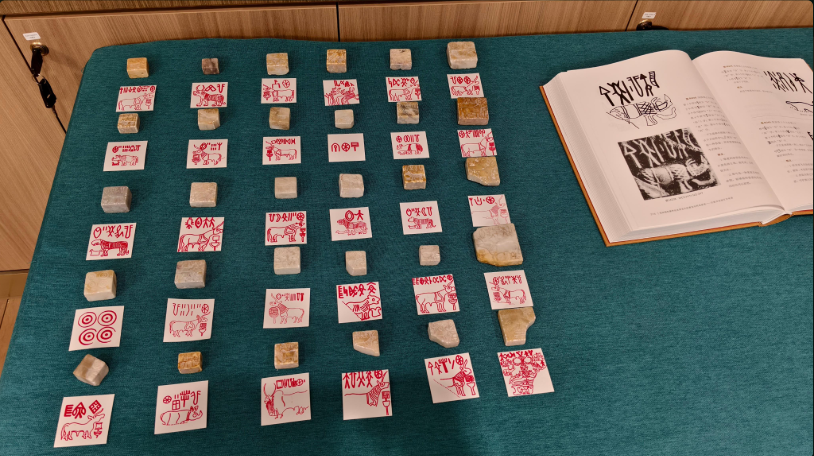
Professor Zhou Yushu introduced that an accidental academic observation in 2021 led him to notice the high degree of similarity between Indus Valley seal symbols and the rock art and pottery inscription symbols of China's Hongshan Culture, thus opening a systematic study of cross-civilizational written symbols. The research team selected 401 ancient seal samples unearthed at the Harappa and Mohenjo-daro sites and conducted comparisons based on authoritative official Pakistani documents and archaeological website materials. They successfully tentatively deciphered 132 individual characters and classified them into ten major categories, including ancestor worship, fertility, the thunder god, divination, totems, fishing and hunting production, and daily life. The work was first launched in China in June 2024, and the English edition was officially released in Beijing at the Embassy of Pakistan in China.
Zhou Yushu explained the three core academic values of the book. First, the research pushes the exploration clues of ancient Chinese writing further back; the accompanying A Study of Prehistoric Chinese Rock Inscriptions traces Hongshan Culture writing back to six thousand years ago. Second, the research team found that the cuneiform script of Mesopotamian civilization and ancient Egyptian hieroglyphs share symbol inheritance clues with Indus Valley seal symbols and Chinese prehistoric writing, opening the prelude to comparative research on the writing systems of the four great ancient civilizations. This grand topic requires scholars from multiple countries to continue exploring over several generations. Third, the research confirms that the history of civilizational exchanges between China and Pakistan far exceeds previous understanding. As early as five or six thousand years ago, the rock art stretching eight hundred kilometers along the Karakoram Corridor preserved common cultural symbols such as dragons, phoenixes, C-shaped dragons, and the thunder god, confirming cultural flows among ancient ancestors. The book also records that the ancient inhabitants of the Indus Valley came from the mountains of China and lived by hunting and farming. Tribal names such as Shang and Zhou, as well as cultural symbols such as dragons, phoenixes, and the mysterious bird, can all be traced in the surviving seals.
During the media Q&A session, Zhou Yushu introduced future research plans. At present, the college has carried out joint academic seminars with the School of History of the University of the Punjab, Pakistan; the team plans to travel to the Karakoram Mountains to conduct on-site archaeological surveys of rock art along the corridor. The college will also plan a world rock art series, covering prehistoric rock art in the Americas, Central Asia, Northern Europe, Mongolia, and other parts of the world. On September 14, Honder College of Arts and Sciences will hold the "Rock Art and World Civilization" International Academic Seminar in Hohhot, inviting scholars from the United Kingdom, the United States, France, South Korea, Russia, Mongolia, and other countries to attend and jointly discuss global prehistoric pictographic symbols. He stated that pictographic symbols are a common feature of prehistoric civilizations, and as Chinese characters are a pictographic writing system that has continued to the present day, Chinese scholars have the responsibility to take the lead in advancing global research on ancient writing. He looked forward to scholars from around the world participating together to solve the puzzles of ancient civilizations' writing.
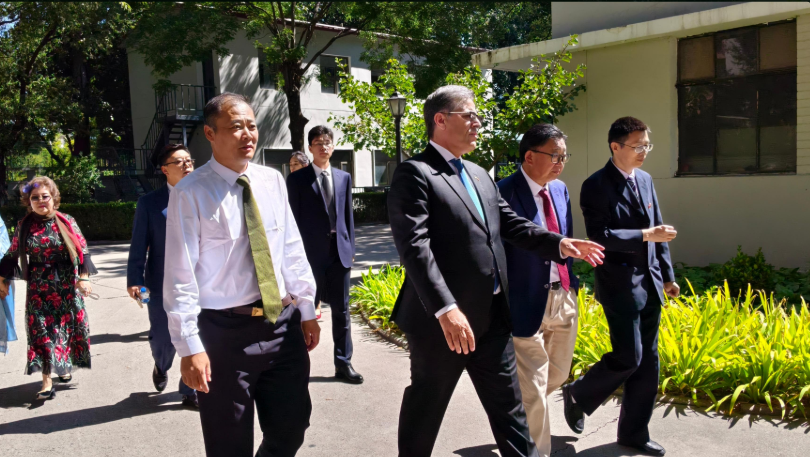
The launch ceremony included segments for unveiling the new book, book donation, and cultural exchange. Professor Zhou Yushu signed and presented books to attending guests; the event also featured a photo exhibition on Pakistani history and culture, which guests visited together to gain a deeper appreciation of Pakistan's splendid historical civilization. During breaks in the event, attending guests engaged in friendly exchanges and discussed the deep friendship between China and Pakistan.
This new book launch, with ancient script archaeology as a bond, has built a new platform for China-Pakistan academic dialogue, turning dust-covered ancient seals into a vehicle for civilizational dialogue and injecting profound historical and cultural connotations into the China-Pakistan all-weather strategic cooperative partnership.