

首页 - Pakistan Studies
Pakistan Studies/To commemorate the landmark 10th anniversary of the China-Pakistan Economic Corridor (CPEC), a high-level international webinar titled "A Decade of China-Pakistan Economic Corridor: Fostering Connectivity, Economic Transformation, and Regional Integration" was successfully convened on December 28, 2023.
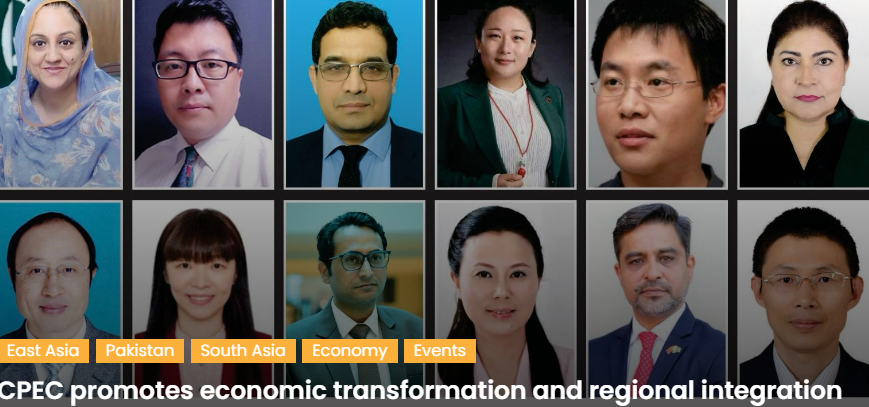
The event was jointly organized by the Centre for BRI and China Studies under the Institute of Peace and Diplomatic Studies (IPDS), and the Pakistan Research Center at Inner Mongolia Honder College of Arts and Sciences, China, in strategic collaboration with the Alliance of China-Pakistan Research Centers. The forum brought together a distinguished panel of leading scholars, policy experts, and researchers from both nations to reflect on CPEC's transformative journey and map out its future trajectory.
Speakers at the webinar unanimously underscored that CPEC has played a pivotal role in pioneering a "China-Pakistan Community with a Shared Future." Over the past decade, the corridor has significantly reshaped Pakistan's economic landscape, catalyzed industrialization, and made profound contributions to poverty alleviation.
In particular, regional connectivity projects—notably the "Farm-to-Market" infrastructure initiatives—have revolutionized Pakistan’s agricultural supply chains and facilitated rural development. Furthermore, deep-tier cooperation in energy infrastructure and emerging digital technologies has underscored the strategic depth of the bilateral relationship.
The international community was urged to view CPEC not through the lens of geopolitical rivalry, but as a global model of open collaboration, integration, and a genuine "game changer" that promotes peace and stability in a historically volatile region.
The seminar featured invaluable perspectives from prominent academic and research leaders:
Inaugural Address & Book Preview:
Dr. Farhat Asif, President of IPDS, highlighted the historical weight of this decade-long milestone. She proudly introduced the forthcoming collaborative book, “CPEC: A Decade of Transformation across Pakistan – Regional Impacts and Progress,” co-authored by IPDS and the Pakistan Research Center at Inner Mongolia Honder College of Arts and Sciences.
Institutional Perspectives on Development:
Tang Jun (Richer Tang), Director of the Pakistan Research Center at Inner Mongolia Honder College of Arts and Sciences, shared key insights from the upcoming book, meticulously highlighting the tangible developmental strides and structural reforms achieved in Pakistan over the last ten years.
Socio-Economic & Energy Impact:
Dr. Xiaqing Xie, Director of the CPEC Research Centre, emphasized how CPEC energy projects have successfully addressed Pakistan’s chronic power shortages, thereby directly contributing to industrial revival and poverty reduction.
The Role of Think Tanks and Academia:
Dr. Liaqat Ali Shah, Head of Policy at the Centre of Excellence for CPEC, stressed the crucial role of academic institutions and think tanks in translating research findings into actionable, high-level policies for governments.
Global Influence and Cultural Synergy:
Prof. Dr. Sun Hongqi, Director of the Pakistan Center for Educational and Cultural Studies at Jiangsu Normal University, elaborated on how the ironclad friendship between China and Pakistan continues to attract positive global attention. Meanwhile, Dr. Tahir Mumtaz, Director of the China Study Centre, emphasized the need to prioritize grassroots people-to-people exchanges and collaborative scientific innovation in the next phase of CPEC.
The webinar also delved into specialized areas of modern cooperation:
The webinar concluded with a shared commitment to further strengthen academic alliances. Through joint publications, policy briefs, and collaborative forums, the organizing institutions plan to continue providing intellectual support to ensure the high-quality and sustainable development of the second phase of CPEC.


