

首页 - Pakistan Studies
Pakistan Studies/Research Lecture on China-Dispatched Chinese Language Teachers in Pakistan
To deepen students' understanding of Pakistani culture, the Department of Foreign Languages at Inner Mongolia Honder College of Arts and Sciences hosted a lecture titled "Research on China-Dispatched Chinese Language Teachers in Pakistan" on the afternoon of 19 October 2021, in Room 402 of the Dikun Building. The lecture was delivered by Professor Tang Jun, Director of the Pakistan Research Center.
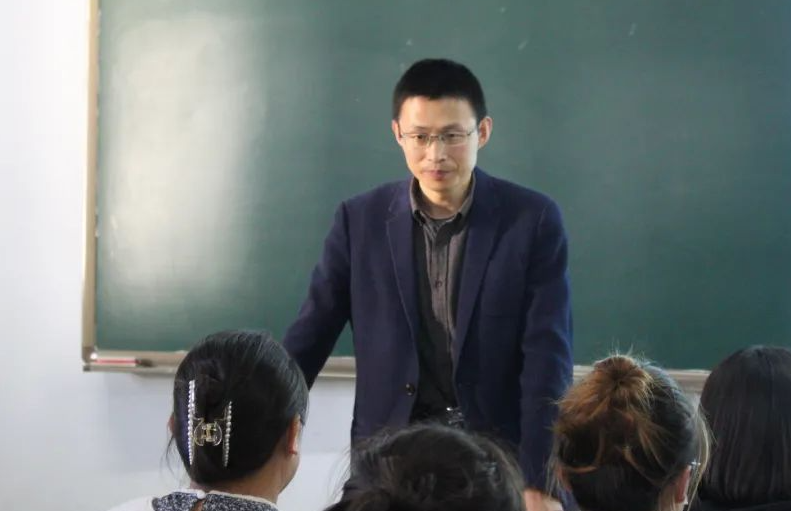
Language serves as both a tool and a bridge for communication between different cultures. The global standing of a nation's language reflects its comprehensive national strength. In the context of the Belt and Road Initiative, the Chinese language has been carried abroad through China's economic, political, and cultural exchanges with partner countries. In turn, this outward spread of the language reinforces those very exchanges, facilitating the smooth implementation of policies across economic, political, and cultural spheres. This symbiotic relationship underscores the strategic importance of international Chinese language education as a pillar of people-to-people connectivity.
Professor Tang Jun began the lecture by introducing the background of the Chinese Department at the National University of Modern Languages (NUML) in Islamabad, Pakistan. Founded in 1969 as an institute and granted full university status in 2000, NUML has grown into one of Pakistan's premier institutions for linguistic and cultural studies, offering instruction in over 25 languages. Its Chinese Department, established in the early 1970s, stands as one of the oldest and most respected centres for Chinese language learning in South Asia. Professor Tang traced the history of outstanding Chinese language teachers dispatched to NUML by China's higher education authorities from 1970 through 2018. These state-sponsored teachers have served as true ambassadors of Chinese language and culture — living embodiments of China's image abroad. As Professor Tang emphasised, the purpose of reviewing the history of China-dispatched Chinese language teachers at NUML's Chinese Department is to "learn from the past to understand the present, and draw wisdom from the study of history."
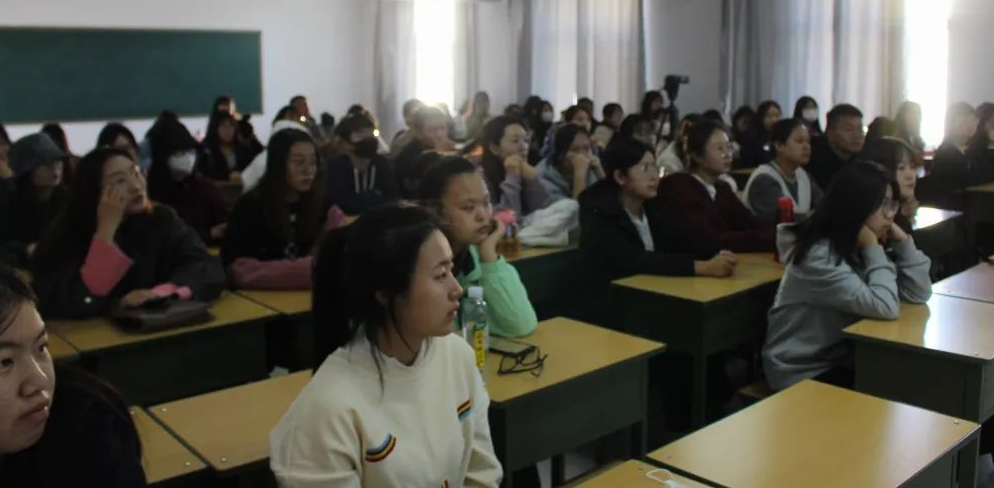
China's programme of dispatching Chinese language teachers to Pakistan dates back to the earliest days of diplomatic engagement between the two countries. Even before the formal establishment of diplomatic relations, cultural exchanges were underway. The systematic deployment of Chinese teachers to NUML began in the 1970s and has continued uninterrupted for over five decades, surviving geopolitical shifts and domestic challenges in both countries. These teachers have undertaken far more than classroom instruction: they have designed curricula, developed locally relevant teaching materials, trained successive cohorts of Pakistani students — many of whom have gone on to become diplomats, business leaders, and scholars — and laid the institutional foundations for sustainable Chinese language education in Pakistan. Their quiet, persistent work represents one of the most enduring and successful dimensions of China-Pakistan cultural cooperation.
Under Professor Tang's expert guidance, the audience learned that after more than 50 years of development, and thanks to the dedicated efforts of both local Pakistani Chinese language teachers and the assistance of China-dispatched educators, the Chinese Department at NUML has finally reached a point where it can stand firmly on its own feet. This marks a fresh beginning and stands as a successful model in the realm of international Chinese language education and promotion. The model can be described as a three-stage process: first, assisting overseas universities in establishing and managing a Chinese department; second, helping to train local teachers and develop curricula tailored to local needs; and third, eventually handing over full independent management to the host university. This trajectory — from dependency to autonomy, from external support to indigenous capacity — embodies the highest ideals of educational cooperation and capacity building.
The lecture not only enhanced the students' understanding of the NUML Chinese Department and its remarkable history, but also broadened their horizons and deepened their appreciation of the significance of their own language. For students in the Department of Foreign Languages, the lecture offered a powerful reminder that their linguistic skills are not merely academic assets but vital instruments of cross-cultural dialogue and international friendship. It is hoped that students found inspiration in this lecture, will continue to absorb more knowledge and constantly enrich themselves, and will go on to display the full talents and capabilities of foreign language students in a multicultural environment. In an increasingly interconnected world, their role as cultural mediators and language professionals will only grow in importance, contributing to the ever-deepening bonds between China and Pakistan.


